Rubina Moqimyar – Afghanistan’s 100-Meter Trailblazer and a Symbol of Women’s Determination
Introduction and Early Life
Rubina Moqimyar was born in Kabul, Afghanistan, during a time when strict social norms and political conditions greatly limited women’s access to education, sports, and public life. Growing up in a large family that valued resilience and self-reliance, she learned the importance of hard work and perseverance from an early age. During the years when girls were not allowed to attend school or participate in athletics, Rubina continued her studies at home and nurtured her growing passion for physical activity and running.
After the political changes in the early 2000s, opportunities for Afghan girls slowly began to reopen. Rubina seized this moment and committed herself to pursuing athletics. She had a natural talent for sprinting, and once the path became available, she stepped into the world of sports with energy, discipline, and determination.
Entering the World of Sprinting
Rubina began her athletic journey in an environment lacking professional sports infrastructure. There were no modern training tracks, no specialized equipment, and no expert coaches available to guide her. Still, she trained consistently, often in open fields or makeshift spaces, using basic tools and relying heavily on her own creativity.
Her training extended beyond physical preparation. Rubina focused on building mental strength, discipline, and concentration — qualities essential for any athlete who hopes to compete at an elite level. She understood early on that if she wanted to stand on the world stage, she needed not only physical speed but also emotional endurance and inner confidence.
Challenges Faced as a Female Athlete in Afghanistan
Rubina’s path was filled with obstacles that would discourage most athletes, especially women living under restrictive conditions. She confronted:
1. Lack of proper sports facilities
With no standard running tracks or high-quality training resources, she crafted her own routines and trained in whatever safe space she could find.
2. Social and cultural resistance
In a society where women’s participation in sports was often questioned or discouraged, Rubina faced stigma, criticism, and doubt — yet she continued moving forward.
3. Limited access to professional coaching
Without experienced female coaches or technical support, she learned many sprinting techniques on her own through practice and observation.
4. Security and safety concerns
Instability and insecurity restricted her training options, making it difficult to follow a consistent athletic schedule — but she persevered regardless.
Rubina overcame these barriers through sheer determination and an unwavering belief in her own potential.
Historic International Representation
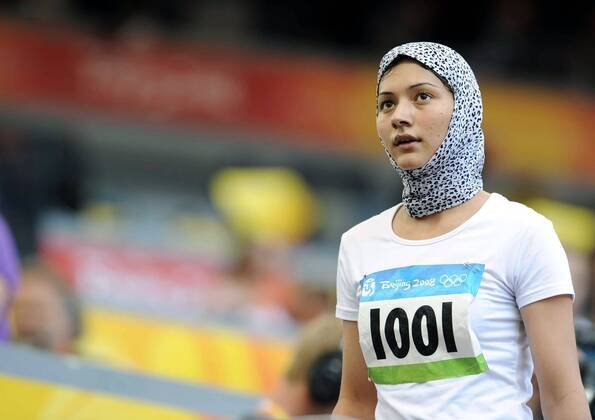
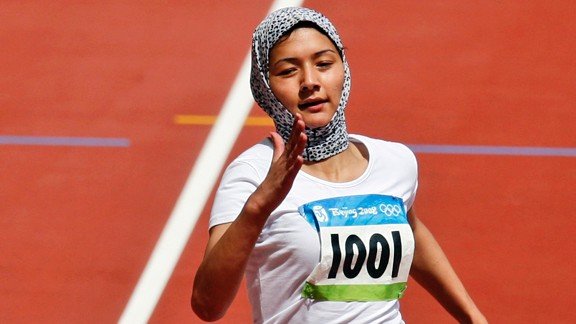
Rubina Moqimyar made history as one of the very first Afghan women to ever compete in the Olympic Games. Still in her teenage years, she stepped onto the track as a representative of Afghanistan in the 100-meter sprint.
Her participation was far more significant than a single race. Wearing her headscarf and standing with confidence before a global audience, Rubina symbolized the courage of Afghan women and the start of a new era in Afghan sports. She proved that even without advanced facilities or equal opportunities, Afghan women could compete on the world stage.
She later represented Afghanistan in another Olympic appearance, marking her as one of the most recognized female athletes in the country’s modern history.
Social Impact and Inspiration
Rubina’s influence extends far beyond athletic performance. Her visibility transformed public perceptions of Afghan women in sports. She inspired countless young girls across the country — girls who had never imagined that someone from their background could one day stand at the Olympics.
Her journey encouraged many families to support their daughters’ athletic ambitions. Through her example, she demonstrated that strength, modesty, faith, and athletic excellence can coexist. She also caught the attention of international media and organizations, motivating global support for women’s sports in Afghanistan.
Leadership, Advocacy, and Future Goals
Following her competitive years, Rubina became active in social and public initiatives. She used her platform to advocate for women’s empowerment, youth development, and expanded opportunities for girls in both education and sports.
Her goals include:
- Promoting equal access to sports for Afghan girls
- Supporting the development of women’s athletics programs
- Encouraging families to allow their daughters to pursue professional sports
- Serving as a role model for future Afghan athletes
- Helping women maintain visibility and participation in global sports arenas
Rubina continues to be an influential figure whose voice and experience highlight the importance of perseverance and opportunity.
Rubina Moqimyar stands as one of Afghanistan’s most inspiring sports pioneers. Despite growing up with limited resources, cultural barriers, and social restrictions, she reached the world’s greatest athletic stage — the Olympic Games. Her journey is a testament to the power of determination, courage, and hope. She has become a symbol of possibility for Afghan women and a reminder that talent can shine even in the most challenging circumstances.